
When you get a new glasses prescription, choosing frames is usually the fun part! But choosing the right lenses matters just as much, if not more. At ForSight Unique Eye Care & Eye Wear, we help patients choose lenses based on their prescription, lifestyle, frame choice, and visual needs.
If you’ve ever wondered what makes one lens different from another, here’s a simple breakdown of standard vs. premium eyeglass lenses.
A standard eyeglass lens is designed to correct your prescription and help you see clearly. For some people, that may be enough! If your prescription is simple, you only wear glasses occasionally, or you’re choosing a backup pair, a standard lens may be a good fit.
However, standard lenses may not include every upgrade that can improve comfort, appearance, durability, or day-to-day performance.
“Premium” isn’t one specific lens. It usually means the lens includes upgraded materials, coatings, technology, or customization.
Premium lens options may help with:
Before we get too carried away, the goal isn’t to add every upgrade. It’s to choose the right upgrades for your eyes, your frames, and your everyday life.
If you want to understand why the full eyewear experience matters so much, read our related blog on why quality glasses matter after an eye exam.
Anti-reflective coating is one of the most popular lens upgrades because it can make a noticeable difference in everyday wear. It helps reduce distracting reflections from headlights, overhead lights, screens, and camera flashes. It can also make your lenses look clearer, so your eyes are more visible when someone is looking at you.
This can be especially helpful if you:
Anti-reflective coating doesn’t remove every glare issue, but it can make glasses feel clearer and more comfortable in many everyday situations.
If glare, night driving, or blurry vision has become more noticeable, it may also be time to schedule a comprehensive eye exam in Savannah, GA to make sure your prescription and eye health are up to date.

If you have a stronger prescription, your lenses may be thicker or heavier depending on the frame and lens material.
Premium lens materials, such as high-index lenses, may help make lenses thinner and lighter. This can improve how your glasses look and feel, especially if you wear them all day.
Thinner lenses may be helpful for:
This is also why frame choice matters! A beautiful frame still needs to work well with your prescription. If you’re choosing new eyewear, our team can help you explore custom eyewear in Savannah that fits both your style and your lenses.
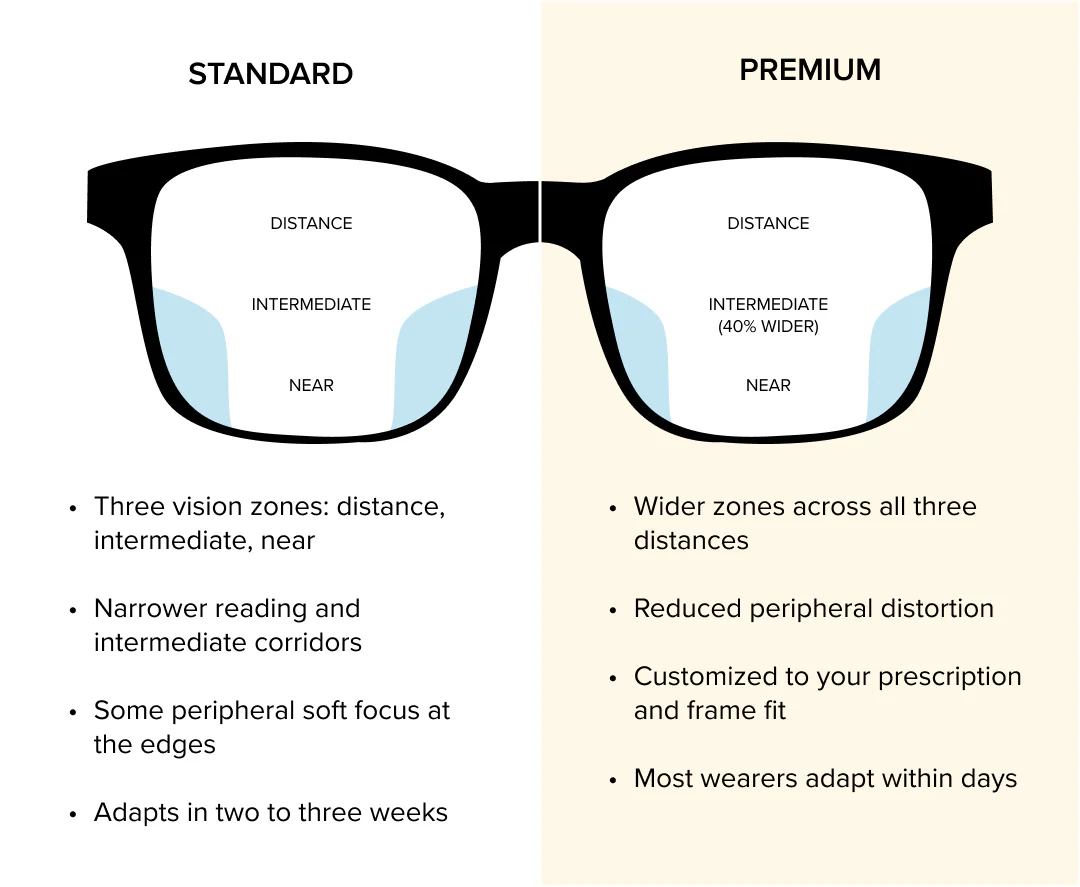
Progressive lenses are sometimes called “no-line trifocals” because they help you see at multiple distances without the visible line found in traditional bifocals or trifocals.
Instead of separating each prescription area with a line, progressive lenses gradually change in power as you move from the top to the bottom of the lens. The upper portion supports distance vision, the middle portion supports intermediate vision, and the lower portion supports near vision.
That means one pair of glasses can help with everyday tasks like driving, computer work, reading, shopping, checking your phone, and moving through your day without constantly switching glasses.
Premium progressive lenses may offer a more customized experience, with smoother transitions and wider usable viewing areas. They may be especially helpful if you wear progressives all day or have struggled with progressive lenses in the past.
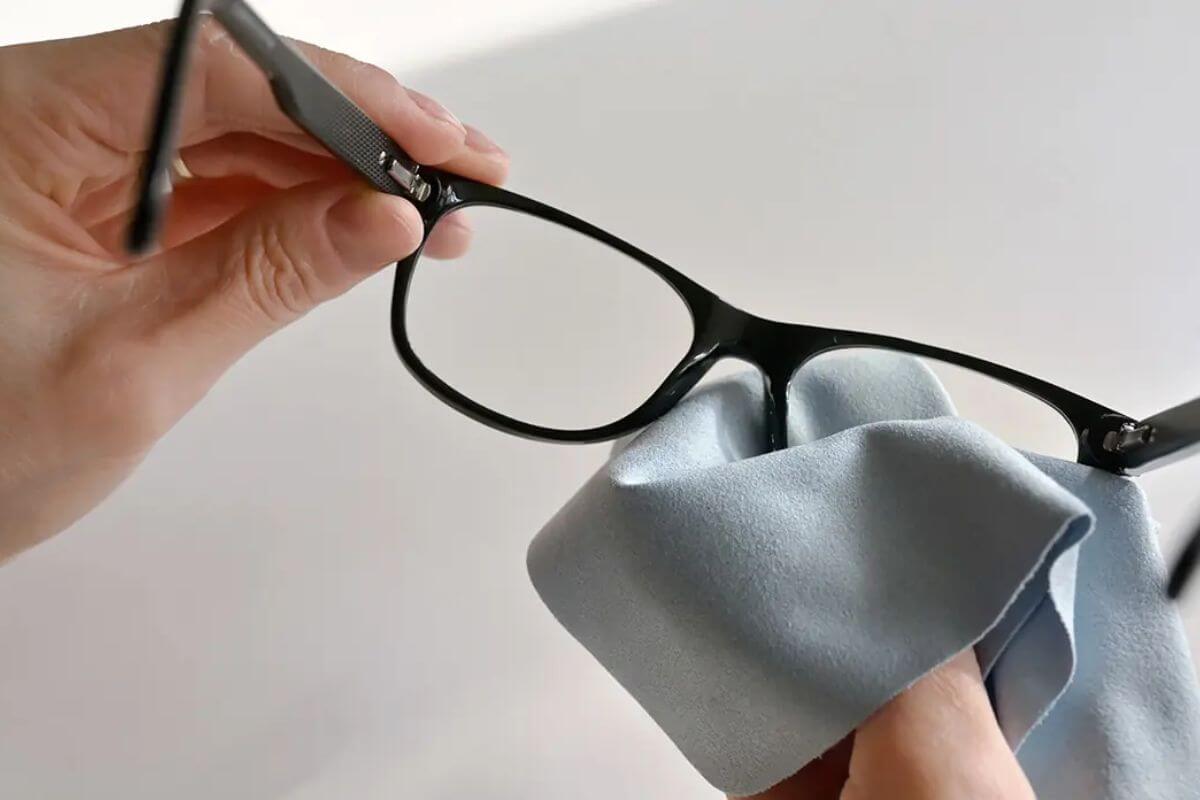
Some premium lens coatings are designed to make glasses easier to care for. These coatings may help resist scratches, smudges, water, dust, and fingerprints. That means your lenses may stay cleaner longer and feel easier to wipe throughout the day.
One important note: scratch-resistant does not mean scratch-proof. Your lenses still need proper care!
To protect your glasses:
P.S. We recommend having your glasses cleaned and adjusted every two to three months to help keep them fitting properly. If your glasses feel loose, crooked, or uncomfortable, bring them in for quick maintenance with our opticians!
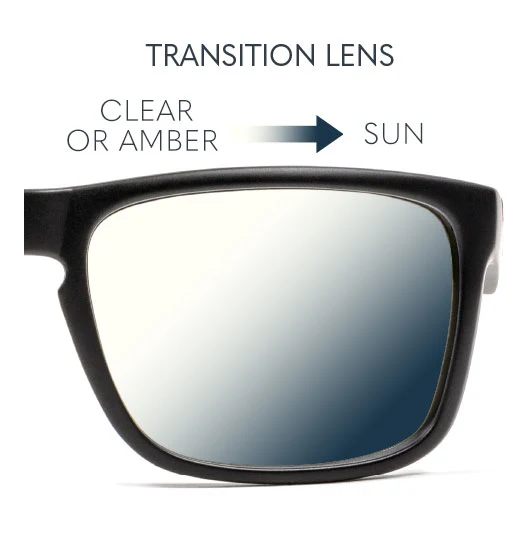
Light-adaptive lenses, also called photochromic lenses, are designed to darken when exposed to UV light and return toward clear indoors. Transitions® lenses are one well-known type of photochromic lens.
They can be helpful if you move between indoor and outdoor spaces often and don’t want to switch glasses constantly. When you step outside, the lenses darken in response to UV exposure. When you come back indoors, they gradually return toward clear.
One thing to know: most car windshields have UV protection, so photochromic lenses typically don’t get as dark inside the car as they do outdoors. If you spend a lot of time driving in bright sun, prescription sunglasses may still be the better choice for the car.
Light-adaptive lenses may be a good option if you:
Light-adaptive lenses are optional and aren’t included in every premium lens package, but they can be a great convenience upgrade for the right person.
If you spend a lot of time outdoors, you may also want to explore prescription sunglasses or sunwear. Our Savannah sunglasses guide is a great place to start!
If you’re choosing new glasses in Savannah, GA, ForSight Unique Eye Care & Eye Wear can help you find lenses that match your prescription, your frames, and your lifestyle.
Learn more about our custom eyewear in Savannah or schedule a visit to find the right lenses for your next pair of glasses.


Sign up to stay in the loop about the latest happenings and specials at ForSight!
"*" indicates required fields
If you need to reach Dr. Morrow after business hours please call our main office at 912-483-6600. Our voicemail will prompt you to dial #1 for emergencies which will transfer your call directly to Dr. Morrow’s cell phone.
NOTE: There is a $100 after-hours service fee for eye emergencies seen after normal business hours listed below.
Mon – Wed: 7:30am – 6pm
Thurs – Fri: 7:30am – 4pm
Sat – Sun: Closed